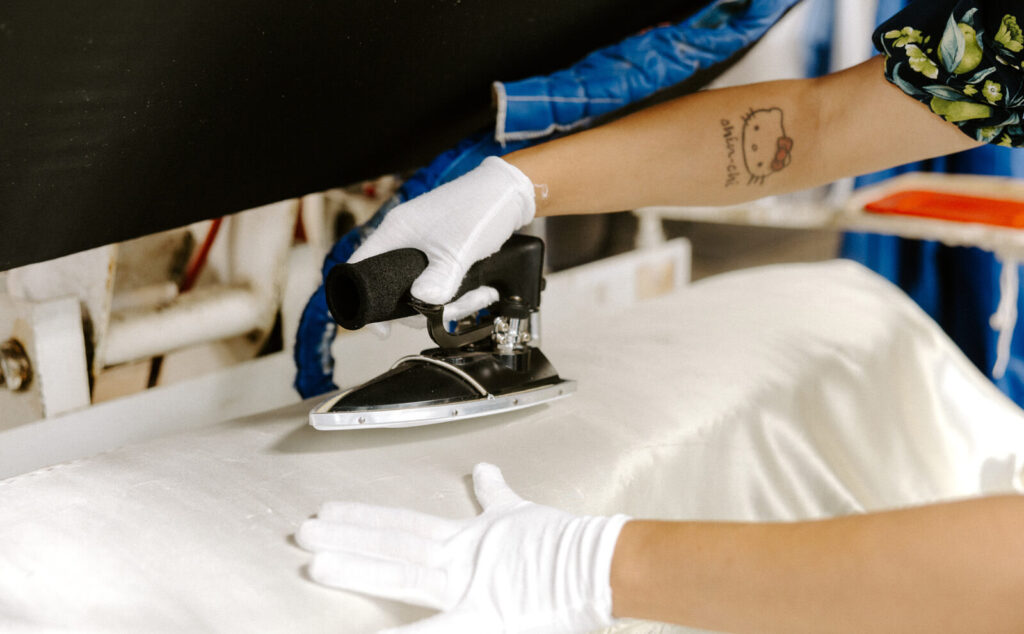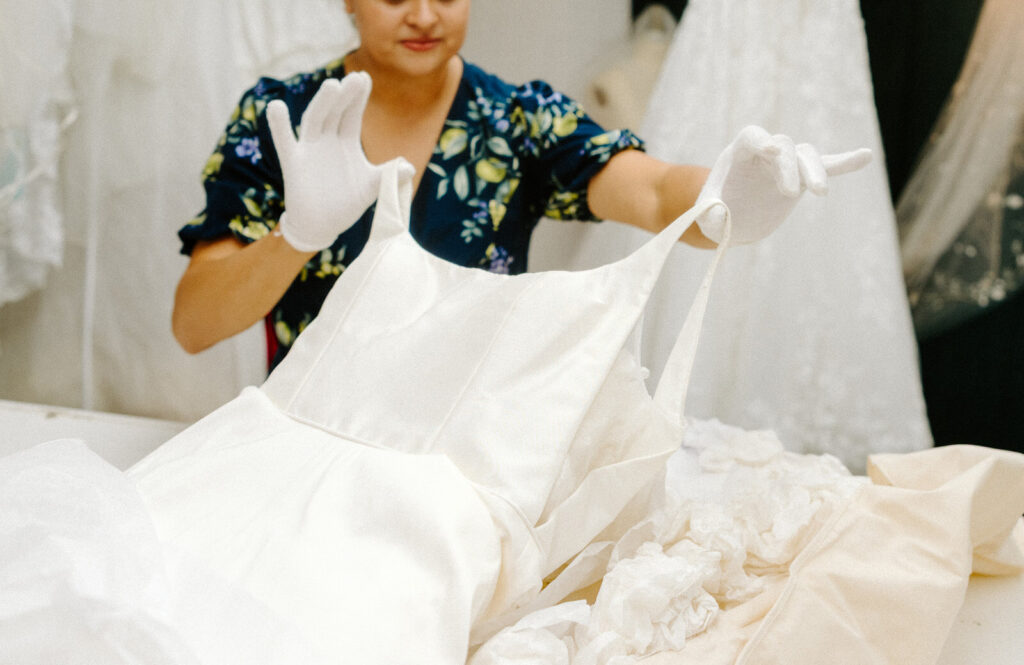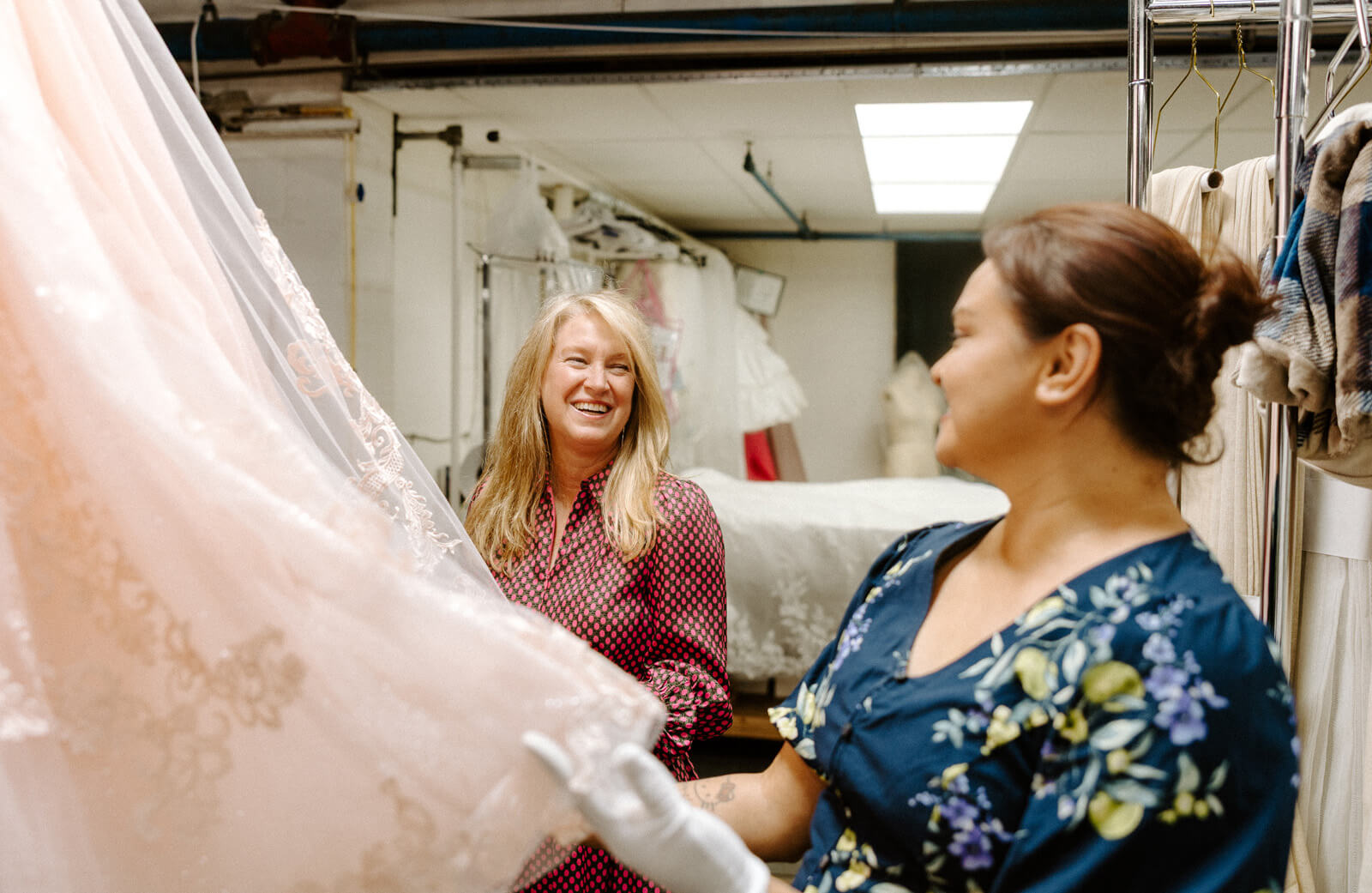
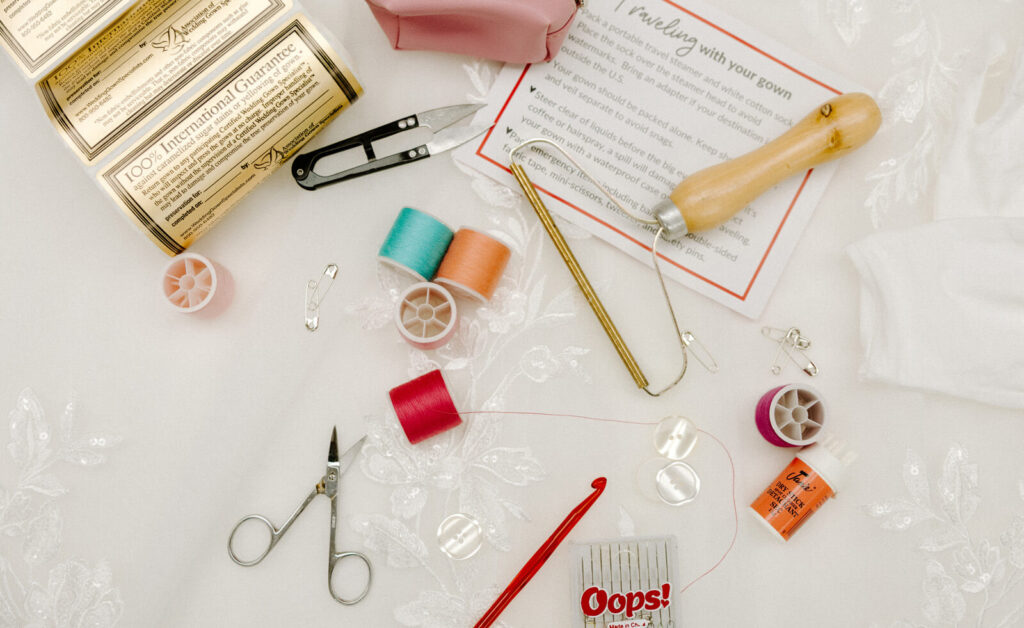
The wedding dresses arrive in all kinds of conditions at Glyndon Lord Baltimore Cleaners. Usually by the time they get there the dresses have seen the brunt of a long and wonderful day. The bottoms of the gowns are often filthy from walking down the aisle or all those turns on the dance floor. There are food mishaps, grass marks, and usually a stain of indeterminate origin. Some gowns arrive within a few weeks of a wedding; in other cases, it will be decades before someone pulls the dress out of the back of a closet.
For Ana Moreno, the wedding gown specialist at Glyndon Lord Baltimore, it’s just another day in the office. “I touch every dress,” she says. There’s an intake form to be filled out by the bride (or, more likely, her mother) and photos are taken of the dress. And then she starts to “piece together what something may have looked like in the beginning.” It’s like being a chemist, says Moreno, who has a degree in fine arts. There’s research, quality control, analysis, collaboration, and a lot of documentation.
“You’re also an artist,” says Janet Garman, who married into her husband’s family dry cleaning business and became vice president in 2018. The Merrick family opened Glyndon Cleaners in 1921 and, in the late 1940s, they sold it to Robert Mathias, grandfather to Mike Garman (Janet’s husband), now a third-generation owner. (Glyndon Cleaners bought Lord Baltimore Cleaners in 2004.)
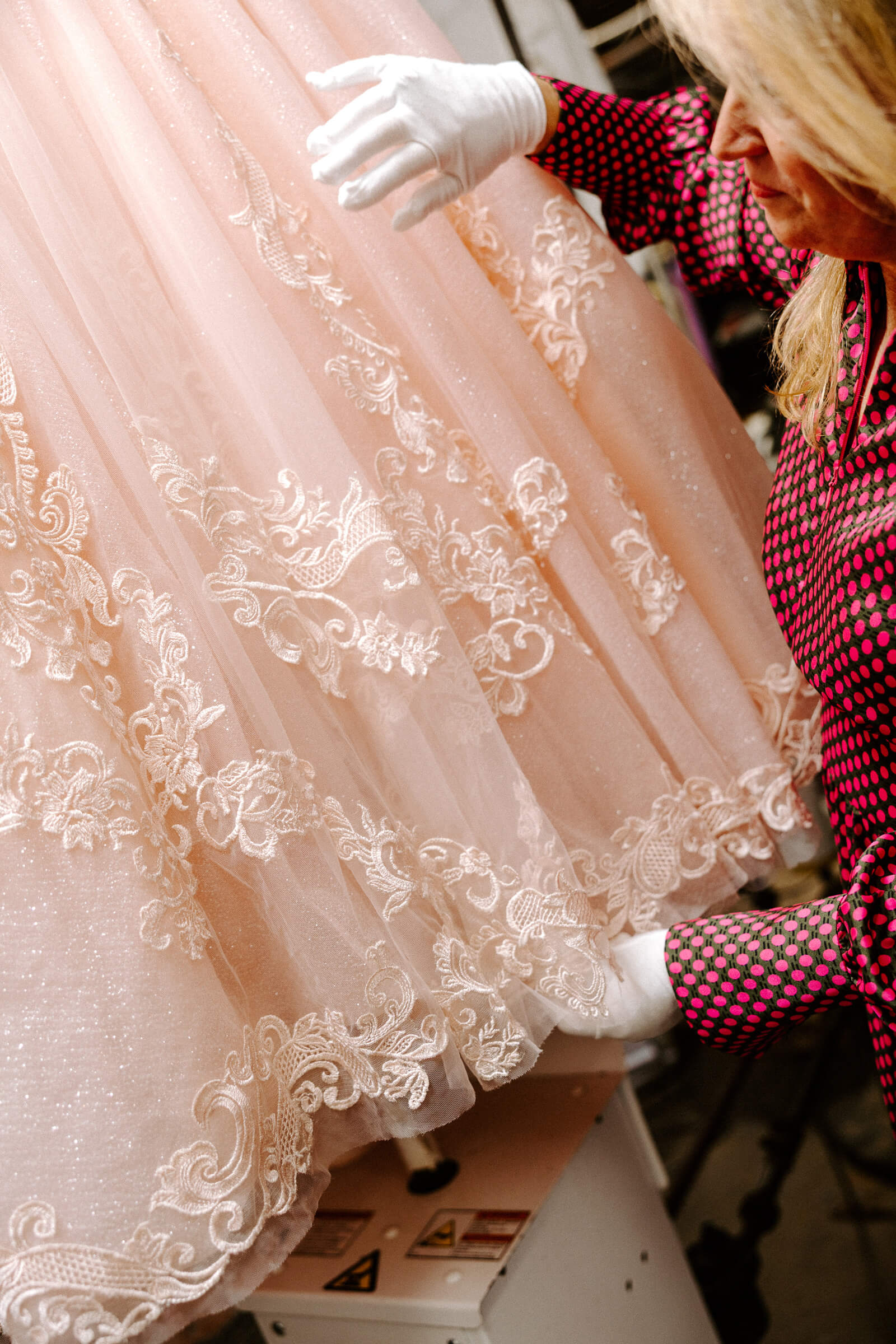
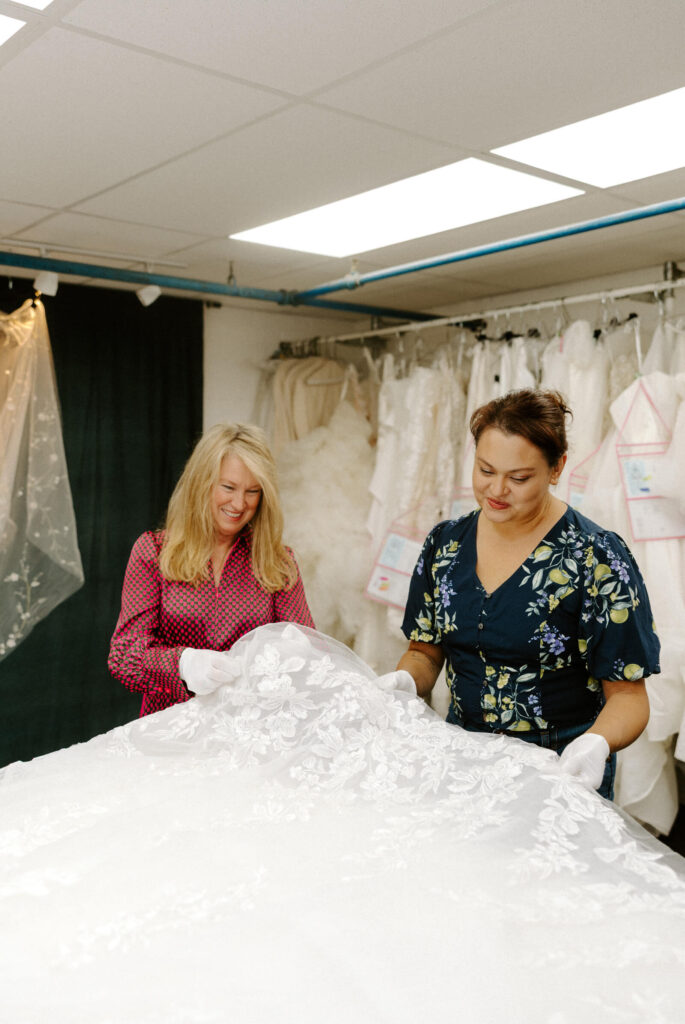
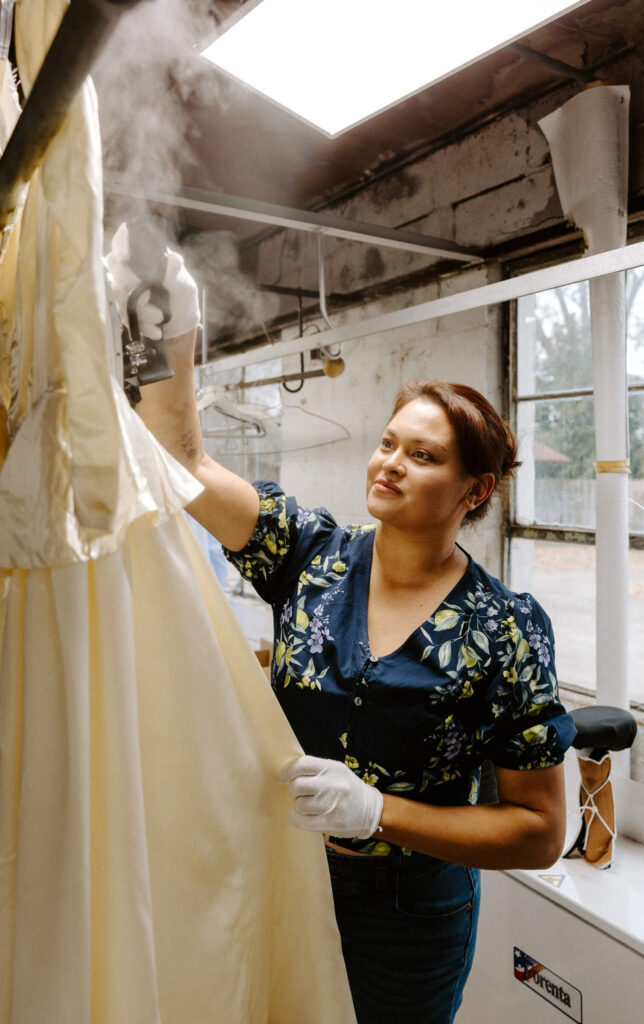
Wedding gown cleaning takes about 10-12 weeks before the dress is returned in a pink garment bag. Preservation can take longer, depending on how badly a dress is damaged, and it’s then packaged in a storage chest with tissue that prevents fabric deterioration. The box can be opened—it has a removable muslin zipper dust cover—but it’s not recommended, because the preservation will be altered. So, brides are invited to visit their dress before it gets packed up.
Working on a dress is also like being an art conservator and detective. “You go layer by layer,” says Moreno. “You want to make sure you have all the pieces to see the bigger picture.” They will check in with a bride throughout the process, giving them all the information of how the fabric is holding up, and letting the bride decide whether to try another soak, dry brush, solvent, or just leave it as is. Sometimes the answer is living with a stain before the fabric is irreparably damaged.
At the end of the process, there is usually a gasp of delight from the bride, says Moreno. It takes them right back to their wedding day. Says Garman, “These gowns all have their stories.”